Redmi K20 Pro/Xiaomi Mi 9T Pro Review: ‘Flagship Killer’ Reimagined
About five years ago, the word “affordable” would not be sung in the same lyric as the words “flagship smartphone.” But, in the contemporary smartphone market, the two adjectives are often married under the umbrella term “affordable flagship.” The phrase, quite explicitly, describes smartphones that look and feel like a flagship but cost way less than a classic flagship. The concept has become a reality thanks to companies like OnePlus and Xiaomi. With the crossover of affordability and premium features, these inexpensive flagships – just like recently launched Redmi K20 Pro – have massive mass appeal and can drive more users than actual premium devices. The smartphone has been launched internationally as the Xiaomi Mi 9T Pro and its targetted market include Europe.
Redmi has taken a leap into the premium segment, transcending its pedigree of affordable and budget smartphones. Its parent company Xiaomi has moved the earth with its aggressive marketing to fortify claims of the Redmi K20 Pro being an invincible affordable premium flagship. While Xiaomi has launched several flagships in the years gone by, its journey to radicalize premium smartphones began last year with its first “Flagship Killer”, the POCO F1. The Redmi K20 Pro/Mi 9T Pro carries forward this legacy with a suffix 2.0 following the title.

While its eligibility to carry the Xiaomi’s Flagship Killer bloodline forward after the POCO F1 remains arguable, Xiaomi has pitted its wits against OnePlus in the rapidly surging premium segment. Xiaomi exhibits confidence that the Redmi K20 Pro will wolf down its competitor in the segment; thus, deciding to call the smartphone an “Alpha Flagship.” The Qualcomm Snapdragon 855 mobile platform is one of the primary reasons the Redmi K20 Pro/Xiaomi Mi 9T Pro makes the cut as a powerful smartphone. But unlike the POCO F1, which was a medley of hardcore raw specifications tethered to an unexciting polycarbonate design, the Redmi K20 Pro trumps that premise with a premium and stimulating glass design. This is complemented by an AMOLED display without a notch hindering the symmetry of your device, a selfie camera shuttled by a pop-up mechanism, a camera triad on the back with dedicated sensors for optical zooming and ultra-wide photography aside from the primary 48MP shooter.
With this new and more premium product, Xiaomi enters the territory demarcated by the ₹30,000 price point in India. The Redmi K20 Pro/Mi 9T Pro is charming and attractive, but if you demand more glitz, there’s a limited edition gold-plated and diamond-studded variant which is nearly 15 times as expensive as the regular K20 Pro.
I’ve been using the Redmi K20 Pro as my primary device for nearly a month now and have come to form opinions about the aspects that can influence your decision of buying the smartphone.
Note: Xiaomi India loaned us an 8GB/256GB variant of the Redmi K20 Pro and a 27W Turbo Charger for the review.
Redmi K20 Pro/Xiaomi Mi 9T Pro Specifications
| Specifications | Redmi K20 Pro/Xiaomi Mi 9T Pro |
|---|---|
| Dimensions & Weight |
|
| Display |
|
| SoC | Qualcomm Snapdragon 855:
|
| RAM & Storage |
|
| Battery | 4000mAh |
| Fingerprint Sensor | Optical In-display |
| Rear Camera |
|
| Front Camera |
|
| Android Version | MIUI 10 based on Android 9 Pie |
| Colors | Flame Red, Glacier Blue, Carbon Fiber Black |
In terms of specifications, the K20 Pro stands tall and firm, but does it break new grounds in terms of what it delivers? You’ll hopefully have some insight by the end of this review. Let’s start first with the design on the smartphone.
Design
Since the first tease from Xiaomi, the design of the Redmi K20 and the K20 Pro/Mi 9T Pro has been very intriguing. To up its premium game, the smartphone gets a glass sandwich design along with Gorilla Glass 5 protection on both sides. Redmi aces the hypnotizing 3D gradient trend on both the Flame Red and the Glacier Blue variants, and this makes the smartphone very attractive and distinctive. Even after gawking at the patterns for literally several minutes in a row, I feel myself being so much in awe of the mesmerizing reflective surface.


The underlying pattern shifts and changes with the incident light
In my first impressions of the Redmi K20 Pro, I talked about the fundamental layout of various elements in the design, so this section will be more critical and revolve around aspects worth admiring as well as being cautious about.
First of all, I cherish how the Redmi K20 Pro/Xiaomi Mi 9T Pro nestles in the palm, especially considering that I don’t have very big hands. The curvature of the glass back adds to the grip and makes the phone feel slightly lighter, even though it weighs a little over 190 grams. Redmi has added a thin and flexible plastic case within the box for those who prefer covering up fragile phones. Coming to the aspect of fragility, the glass sandwich design may make a few users nervous, even though the K20 Pro doesn’t feel very slippery. For the durability of the glass design, there is Gorilla Glass 5 on both sides and it is likely to put off users expecting the Redmi K20 Pro to feature the latest version of the protective glass. By mistakenly throwing the smartphone in the same pocket as my keys, I have been able to create thick grooves on both the front or the back. So, if you’re already convinced about buying the Redmi K20 Pro, make arrangements for a screen protector along with either a case or a skin for the smartphone.

The display on the Redmi K20 Pro, unlike its back, isn’t as curved and this is something I prize. Based on the comments we received in our first impressions, many individuals seemingly equate curved screens with a premium smartphone and this disposition, in my understanding, is a side-effect of Samsung heaving its premium phone portfolio with curved screens. With the OnePlus 7 Pro, the original flagship killer brand – OnePlus – used this trick to make the smartphone appear more attractive. Personally, however, I prefer the flat display since that not only makes it easier to type on the keys in the outward rows but also makes it easy to use MIUI gestures, especially the back gesture which involves swiping inwards from either of the edges.

The display measures 6.39-inches diagonally and this is the same as the Mi MIX 3, which Max found to be one of Xiaomi’s most premium devices. The Redmi K20 Pro is embarked on a journey to acquire a similar reputation and the display does help it qualify as a premium device with its thin bezels around all the edges resulting in an attractive appearance.
With the Redmi K20 Pro, Xiaomi exhibits its ability to craft beautiful smartphones.
Despite joining the same league as premium smartphones, the Redmi K20 Pro/Mi 9T Pro retains a headphone jack and this considerate step presents a compelling argument to users who are in a long-term relationship with a particular pair of headphones. In an era when dongles are common, the presence of a 3.5mm jack remains debatable. It is commendable that Redmi has managed to cram a headphone jack in the conveniently slim profile of the Redmi K20 Pro. However, that does come at the expense of an IR blaster, which sadly does not find a place on this smartphone. Additionally, I’ve come to grow an affinity for the lights on both sides of the pop-up selfie camera. This is especially useful when the selfie camera rises for incoming video calls or facial authentication.
Throughout my usage, however, I have come to witness an issue with the selfie camera (thanks to Twitter user F.T.L.O.G. for first bringing this to my notice). Light bounces off the shiny metallic area in front of the pop-up camera cavity and this causes flaring when there’s a strong source of light. In most cases, this flaring is trivial unless the smartphone is held at a certain angle to the light source but it does leave you with the constant anxiety of avoiding it. This isn’t unique to the Redmi K20 Pro and can be witnessed on devices including the Realme X as well and a case that veils the reflective metal part should be able to remedy the problem. This video should help you understand the problem.
Display
Xiaomi’s stride to build a meritorious flagship or at least a flagship killer device commences forth with its choice of display on the Redmi K20 Pro/Mi 9T Pro. The smartphone uses an AMOLED display made by Samsung. The display gets a peak brightness of 600 nits and supports ~104% of the NTSC color gamut. Notably, this is the same AMOLED panel as the flagship Xiaomi announced earlier this year – the Mi 9 – but the lack of a notch up on the top allows the Redmi flagship to have a slightly higher screen-to-body ratio. Whether or not Xiaomi contrives the Redmi K20 Pro as a successor to the POCO F1 is something we will get to sense later on in the year, but the AMOLED display does add a new component to Xiaomi’s flagship killer DNA. The display comes with rounded corners and unlike the POCO F1, Xiaomi has taken heed of symmetry this time. The display is hemmed in by thin bezels along all four edges, including the slight chin, which is modestly broader than the other three sides. Redmi uses a fancy moniker – “Horizon” display for this screen on the back of the easily avoidable bezels.

In accordance with AMOLED panels, the Redmi K20 Pro’s display has rich contrast and vivid colors. A yellow overtone masks the display but this can be rectified using either the automatic contrast or high contrast options in MIUI’s display settings. Just like other devices running this Android skin, you can alter the color tones to suit yourself. This is not a Super AMOLED display and may feel limited in terms of brightness in comparison with certain other devices. The difference, however, will irk you only when the Redmi K20 Pro is placed side-by-side with another smartphone that features a Super AMOLED display.
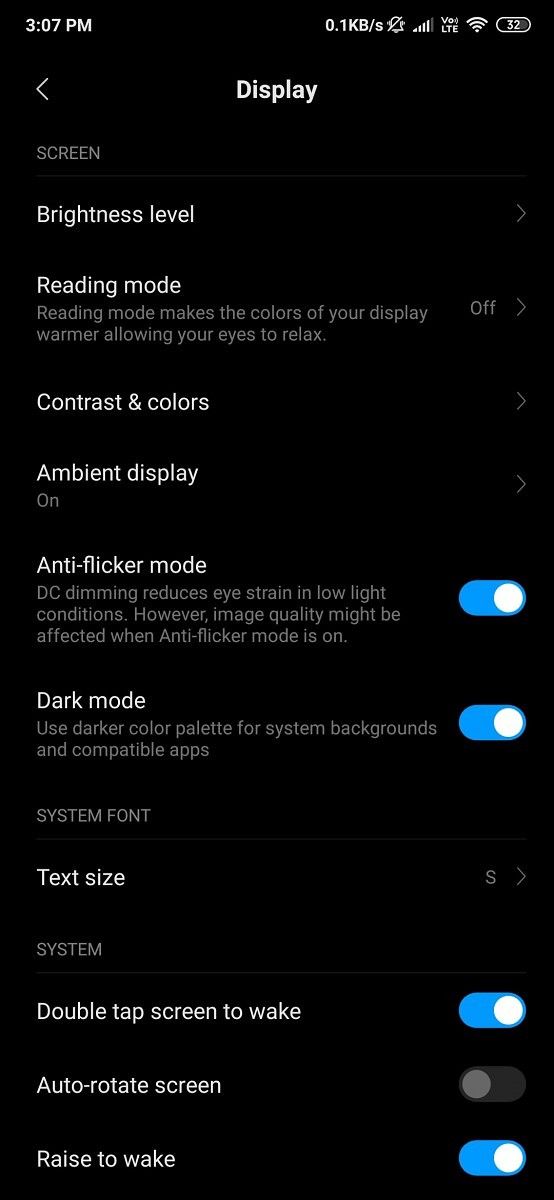
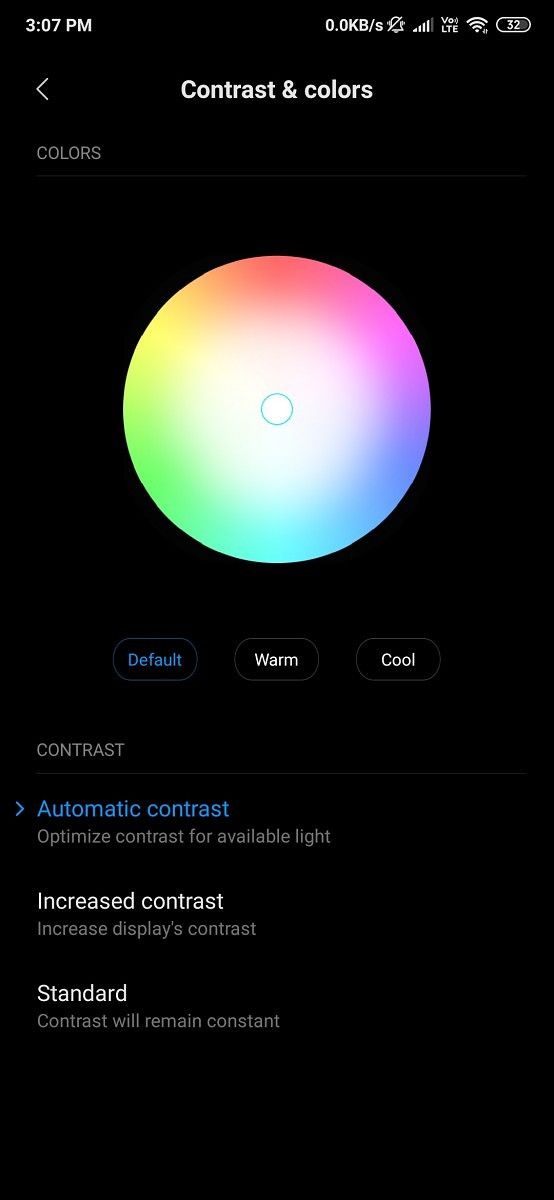

With the ongoing concerns about the harmful effects that AMOLED displays might have due to usage in low ambiance, Redmi has added a DC Dimming mode to the K20 Pro. To the naked eyes, DC Dimming increases the brightness a tad bit but it prevents pulsating light beams at low brightness levels from causing any damage to your eyes. Curiously, at low brightness levels, the brightness of the display does not appear to be uniform throughout the panel and there are visible columns of light and dark gray colors while using apps with a Dark theme/mode. Dylan confirms that the issue is venial as it plagues almost every mid-range OLED panels.

Bands caused due to uneven illumination under the panel. The issue is common on mid-range AMOLED displays and is not unique to the Redmi K20 Pro
On the matter of the quality of this display, I ran a few quick tests using the free version of the Display Tester app by Braintrapp.
Redmi K20 Pro/Xiaomi Mi 9T Pro: The Ultimate Affordable Flagship Experience
The Redmi K20 Pro portrays Xiaomi’s expertise in craftsmanship. Even though beauty is a slippery concept, the K20 Pro/Mi 9T Pro will appease your taste buds if you have the palate for stimulating high performance. The symmetric AMOLED display not only brings out rich colors in almost all forms of content but also helps you evade a notch, which I personally have not grown fond of yet. The Redmi K20 is an excellent device by all means and never fails to surprise in any sense. Even though the synthetic benchmarks show that it may not be on par with other devices such as the OnePlus 7 and the Xiaomi Mi 9, its relative affordability and the total of all the exciting features viz. its expansive display, a pop-up selfie camera, triple – and more importantly – useful cameras outweigh any concerns about lagging performance.
In India, Xiaomi appears to be benefiting from the economy of scale. In the last five years of its presence in India, Xiaomi has surpassed Samsung, and now has four major manufacturing hubs in India. This also helps it keep the prices down compared to OnePlus which, as per the last piece of reporting on it, has been using sister company OPPO’s manufacturing plant to assemble its devices.
In the meantime, Xiaomi and Redmi have been working on crazy innovations like a 108MP cameras and 100W fast charging, and these are likely to shape the future of the Killer Flasghsip lineup by the two brands. Presently, the Redmi K20 Pro feels adept, equipped, and well prepared to not only slay competition but also pose a strong opposition to competitors. The Redmi K20 Pro is a good reason for OnePlus to be worried, not only in India and China but also in markets like Europe where the smartphone launches as Mi 9T Pro very soon.
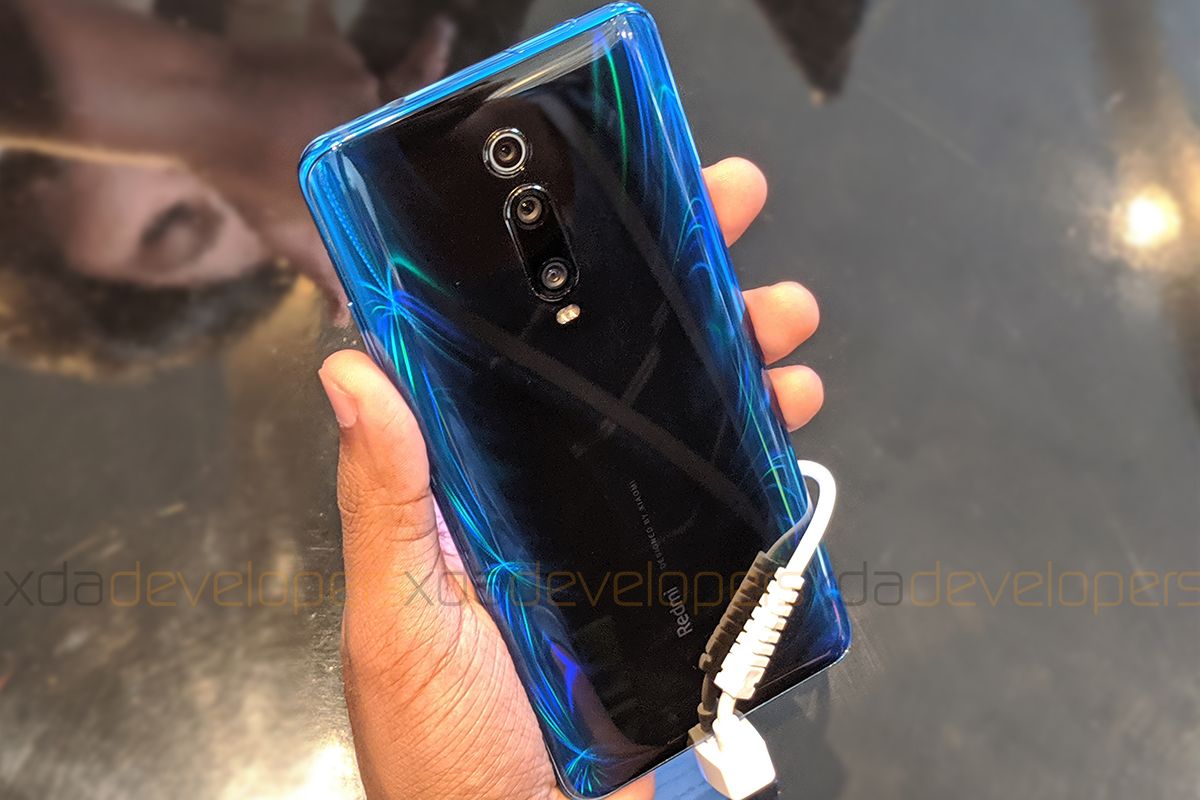

Other color options available in India
In India, the 6GB/128GB variant of the Redmi K20 Pro can be bought for ₹27,999 (~$405) while the 8GB/256GB is available for ₹30,999 (~$450). You can also buy the 27W charger additionally for ₹999 (~$15). The smartphone is available for purchase via Flipkart and Mi.com and you would no longer have to wait for flash sales to buy one. The Xiaomi Redmi K20 Pro has also been launched as the Xiaomi Mi 9T Pro in the European region.
In Europe, the Xiaomi Mi 9T Pro comes in two variants – 6GB/64GB priced at €399 (~$445) while the 6GB/128GB variant comes €449 ($500).